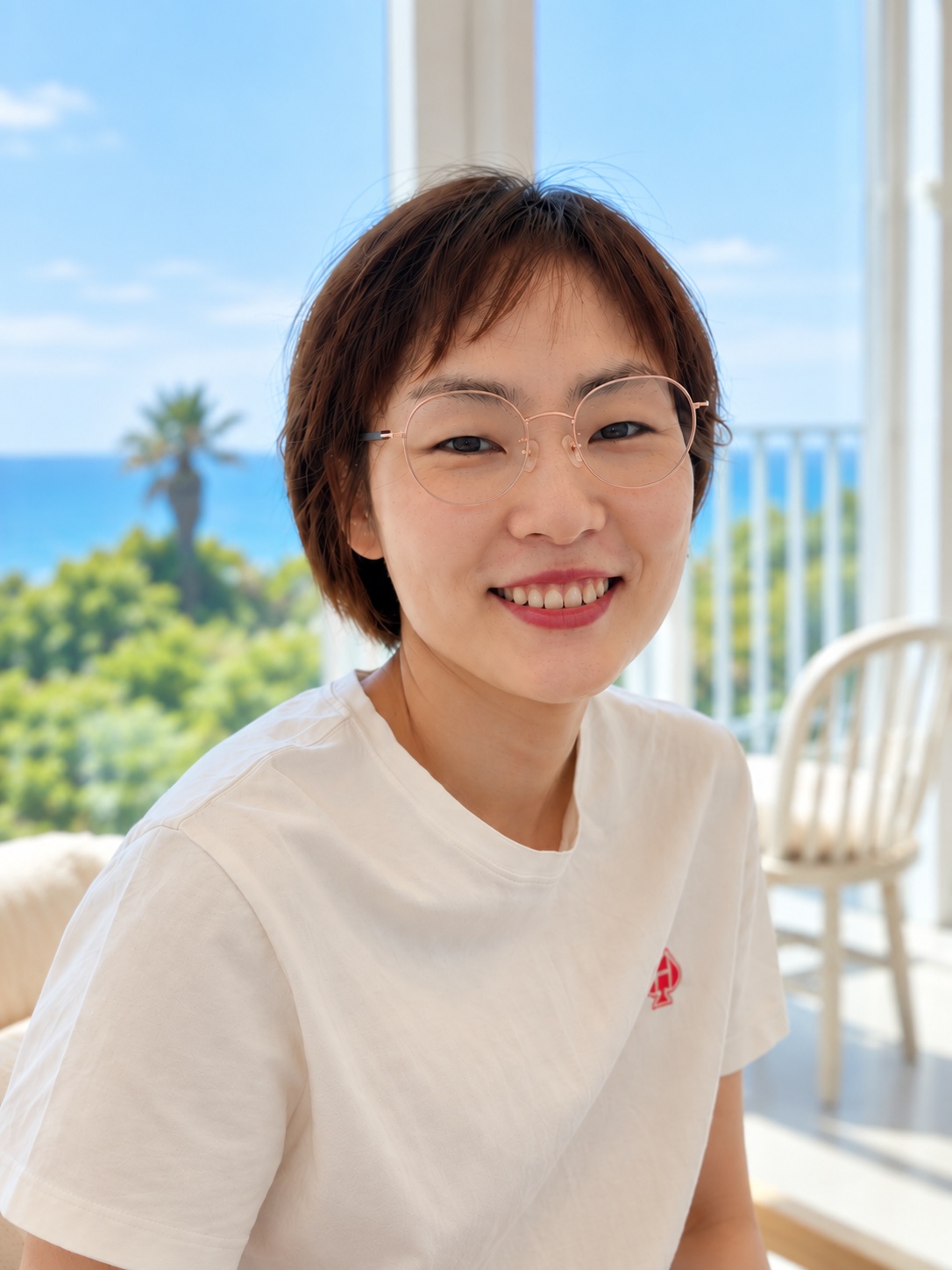
Jinyoung Park

Jinyoung Park, PhDSocial Psychologist
Director, Shared Humanity &
Compassion Lab
Duke University &
UNC-Chapel Hill

Suffering is universal. What we believe about it is not.

I study the beliefs that shape how people meet hardship: whether suffering is universal or confined to the unlucky, whether recognizing it weighs people down or helps them navigate life, and how people regard those who suffer. Across U.S., and Israeli samples, people who saw suffering as universal and enriching showed greater resilience, compassion, and recognition of common humanity, even across lines of active conflict.

I am a postdoctoral associate at Duke University and UNC-Chapel Hill, working with Barbara Fredrickson, and Director of the Shared Humanity & Compassion Lab at Duke, where I am Co-Principal Investigator of a $1.3M John Templeton Foundation project on reframing suffering (2026–2029). I completed my PhD at Duke in 2026, advised by Rick Hoyle and Mark Leary, following an earlier career as a biostatistician at the UNC School of Medicine.

Research

Beliefs about suffering

Across five studies, viewing suffering as universal and potentially enriching — rather than only depressing — predicted better psychological adjustment, greater compassion, and, among Israeli adults surveyed during active conflict, recognition of outgroup suffering and support for peaceful resolution. Brief reframing shifted these beliefs experimentally. The flagship paper appears open access in Personality and Social Psychology Bulletin.

Self-compassion

A four-year longitudinal study shows stress and self-compassion working in synergy to build resilience — hardship itself becomes generative when met with self-kindness. With collaborators at UNC, I study self-compassion where the stakes are highest: an open trial reducing suicidal ideation in transgender adolescents, a randomized trial of Mindful Self-Compassion for Teens with subsyndromal depression, and programs for caregivers of children with disabilities. I have also written on self-compassion for general audiences in Korean.

Intellectual humility

Recognizing the limits of one's own knowledge has consequences beyond the epistemic: our work links intellectual humility to support for peaceful resolution of intergroup conflict (Journal of Applied Social Psychology) and to responsiveness to public health guidance (Personality and Individual Differences).

Methodologically, I work in scale development and psychometrics, structural equation modeling, survival analysis, hierarchical models, and machine learning based methods — a toolkit carried over from clinical biostatistics, where my collaborations span trials published in The Lancet Psychiatry and BMJ.

Funded project

Shared Humanity & Compassion Lab, Duke University · John Templeton Foundation, Grant No. 63879 · 2026–2029

Reframing Suffering to Foster Common Humanity and Compassion

Everyone suffers, but people understand suffering very differently — how common it is, what causes it, whether it can be meaningful, and who is responsible for it. Our research suggests these beliefs shape whether hardship becomes a source of connection or division. With a three-year Templeton grant, the Shared Humanity & Compassion Lab is building the first comprehensive, plain-language framework of beliefs about suffering, drawing on psychology, philosophy, religion, and history; validating a brief Suffering Beliefs Scale; and designing shareable video micro-interventions that invite people to see suffering as a shared human experience. The aim is practical, evidence-based tools for fostering compassion and common humanity across lines of difference.

  • My roleDirector, Shared Humanity & Compassion Lab; Co-Principal Investigator
  • Principal InvestigatorRick H. Hoyle, Duke University
  • Co-DirectorChristine Lathren, UNC-Chapel Hill
  • PartnersGreater Good Science Center (UC Berkeley); Global Compassion Coalition

The Lab runs an open call for commissioned reviews of beliefs about suffering from across the humanities, social sciences, and sciences. Inquiries: jinyoung.park@duke.edu.

Selected publications

Social and personality psychology

  • 2026Park, J., Leary, M. R., Lathren, C., Davis, J. M., Weiser, M., & Hoyle, R. Beliefs about suffering, psychological adjustment, and prosocial orientation. Personality and Social Psychology Bulletin. doi:10.1177/01461672261475828open access
  • 2026Park, J., Lathren, C., Leary, M., Davis, J. M., Weiser, M., Magidovich, A. S., & Hoyle, R. Bridging divides: Intellectual humility's role in peaceful resolution. Journal of Applied Social Psychology, 56(2), 145–154. doi:10.1111/jasp.70042open access
  • 2026Wyly, S., Park, J., & Hoyle, R. H. Too little, too much: A 4-year longitudinal study of within-person deviations in propensity for overinvolvement and student well-being. Frontiers in Psychology, 17, 1870777. doi:10.3389/fpsyg.2026.1870777shared first authoropen access
  • 2024Park, J., Bluth, K., Lathren, C., Leary, M., & Hoyle, R. The synergy between stress and self-compassion in building resilience: A 4-year longitudinal study. Social and Personality Psychology Compass, 18(7), e12978. doi:10.1111/spc3.12978
  • 2024Bluth, K., Bryce, A., Lathren, C. R., Park, J., Pflum, S., & Clayton, M. Reducing suicide ideation in transgender adolescents with mindful self-compassion: An open trial. Mindfulness, 15(12), 3107–3128. doi:10.1007/s12671-024-02421-7
  • 2023Jongman-Sereno, K. P., Hoyle, R. H., Davisson, E. K., & Park, J. Intellectual humility and responsiveness to public health recommendations. Personality and Individual Differences, 211, 112243.

Clinical research and biostatistics

  • 2026Park, J., Kadro, Z. O., Honvoh, G. D., Domeniciello, A. F., Ramsden, C. E., Faurot, K. R., & Miller, V. E. Associations between dietary intakes of omega-3 fatty acids, blood levels, and pain interference in people with migraine: A path analysis of randomized trial data. Nutrients, 18(1), Article 3. doi:10.3390/nu18010003
  • 2025Nomura, N., Siafis, S., Schneider-Thoma, J., Brandt, L., Park, J., Efthimiou, O., … Leucht, S. The trajectory of sedative adverse events caused by antipsychotics: A meta-analysis of individual participant data from randomised, placebo-controlled, clinical trials in acute phase schizophrenia. The Lancet Psychiatry, 12(4), 266–275.
  • 2021Ramsden, C. E., Zamora, D., Faurot, K. R., … Park, J., … Mann, J. D. Dietary alteration of n-3 and n-6 fatty acids for headache reduction in adults with migraine: Randomized controlled trial. BMJ, 374, n1448.

Author of 20+ peer-reviewed publications. Full list in my curriculum vitae.

Selected talks

  • 2025Beliefs about suffering and responses to hypothetical challenges and real-life intergroup conflict. Oral presentation, International Society for Contemplative Research Conference, Chapel Hill, NC.
  • 2025Beliefs about suffering and responses to difficult events. Poster, Society for Personality and Social Psychology Annual Convention, Denver, CO.
  • 2025A brief introduction to Classification and Regression Trees (CART). Guest lecture, UNC School of Medicine, Chapel Hill, NC.
  • 2023Expecting a moderate amount of suffering may promote well-being. Poster, Society for Personality and Social Psychology Annual Convention, Atlanta, GA.

Books

Alongside my academic work, I have written nine books in Korean bringing psychological science — self-compassion, self-esteem, social comparison — to general and young-adult readers.

  • 2023Self-Compassion for Children · WooriHakkyo
  • 2023Understanding Social Comparison for Adolescents · Soehaemunjib
  • 2019Self-Compassion for Teens 나는 나를 돌봅니다 · WooriHakkyo
  • 2018Self-Compassion 나, 지금 이대로 괜찮은 사람 · Houpress
  • 2017Social Psychology for Teens · Wisdom House
  • 2016To My Unloving Self: The Psychology of Self-Esteem 나를 사랑하지 않는 나에게 · Sigongsa

Recognized with the Sejong Book Award from Korea's Ministry of Culture (2018) and Book of the Year from the National Library for Children and Young Adults (2020).

Contact